
Scientists at Celloram Turn COVID-19 Immune Memory into a Powerful New Ally Against Cancer

July 27th, 2026

Nature Communications Publishes Breakthrough Study Showing How COVID-Era Immune Memory Can Be Redirected to Fight Cancer
Celloram, Inc., University Hospitals, and Case Western Reserve University unveil PROTEXI, a novel cancer vaccine platform advancing toward first-in-human clinical trials in sarcoma patients.
CLEVELAND, OH — July 27, 2026 — In a discovery that could redefine the future of cancer immunotherapy, scientists from Celloram Inc., University Hospitals, and Case Western Reserve University have developed a novel cancer vaccine platform that transforms the impact of the largest immunological event in modern history – a synchronized mass immune memory generated through SARS-CoV-2 infection and vaccination – into a powerful ally against cancer.
Published this week in Nature Communications, the study introduces PROTEXI, an innovative dendritic cell vaccine platform designed to harness pre-existing antiviral immune memory to amplify the body’s natural ability to recognize and destroy tumors.
The findings suggest a fundamentally new approach to cancer vaccine design: rather than building entirely new immune responses from scratch, clinicians may be able to redirect immune memories already present in billions of people toward fighting cancer.
Cancer vaccines have long held tremendous promise, yet many have struggled to generate sufficiently robust and durable immune responses, particularly in so-called “immune-cold” tumors that evade immune recognition and remain resistant to existing therapies.
PROTEXI was specifically designed to overcome this challenge.
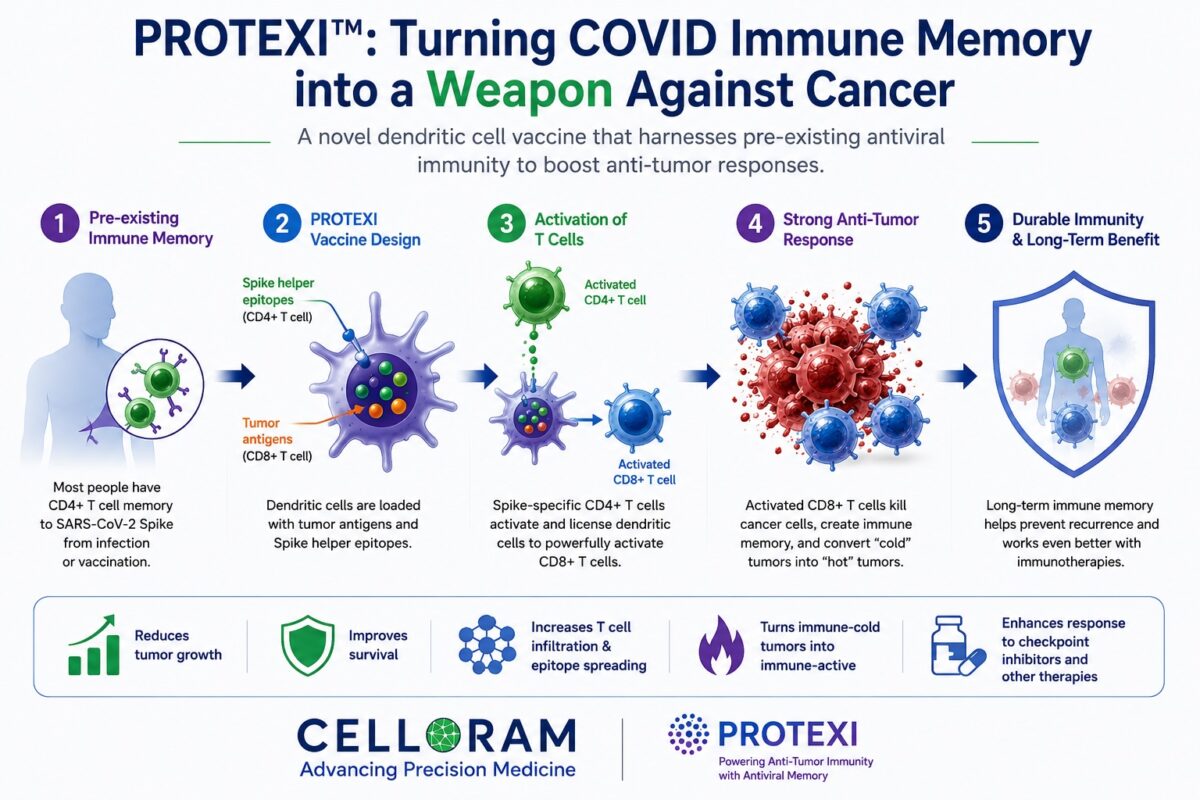
By pairing tumor-specific antigens with helper signals derived from SARS-CoV-2 Spike protein epitopes (small Spike protein fragments recognized by immune systems primed through prior infection or vaccination), PROTEXI converts dormant antiviral memory into a catalyst for antitumor immunity.
In multiple preclinical models of melanoma and breast cancer, PROTEXI slowed tumor growth, improved survival, and transformed tumors that typically evade the immune system into ones that could be more effectively recognized and attacked. The vaccine strengthened the body’s natural cancer-fighting defenses, generated long-lasting immune memory that may help prevent recurrence, and worked even better when combined with other immunotherapies. Importantly, its effectiveness was also demonstrated in humanized mouse models using immune cells from COVID-19-vaccinated donors.
The study showed that PROTEXI leverages pre-existing antiviral CD4⁺ helper T-cell immunity to strengthen tumor-specific CD8⁺ cytotoxic T-cell responses and generate durable antitumor memory, representing a significant advance over conventional dendritic cell vaccines. The platform significantly reduced tumor burden and improved survival in multiple preclinical models.
A New Paradigm in Cancer Vaccines
“Rather than inventing a completely new immune response, we are enhancing the ability of the immune system to recognize cancer by leveraging anti-viral memories it already has,” said Dr. Tej Pareek, Chief Executive Officer of Celloram Inc.
“At Celloram, we believe that breakthrough innovation often comes from looking at familiar challenges through an entirely new lens. Instead of asking how to build increasingly complex cancer vaccines from scratch, we asked a different question: Can we harness the immune memories that billions of people already possess and redirect them against cancer?
PROTEXI represents that ingenuity. By transforming pre-existing antiviral immunity into a therapeutic advantage, we believe this platform has the potential to overcome some of the most fundamental limitations that have hindered cancer vaccines for decades.
Equally important, this work demonstrates the power of collaborative innovation between academia, clinicians, and biotechnology entrepreneurs. We are tremendously grateful to our partners at University Hospitals, Case Western Reserve University, and MedPacto, whose shared vision made this possible.
Building upon these exciting findings, we are actively advancing PROTEXI toward first-in-human clinical evaluation in patients with sarcoma in partnership with University Hospitals. Our ultimate goal is simple yet profound: to translate scientific discoveries into meaningful therapies that extend and improve the lives of patients who currently have limited treatment options.
Scientific Discovery Meets Clinical Translation
“We sought to answer a fundamental question: could the immune system’s memory of a viral threat be repurposed to recognize and eliminate cancer more effectively?” said Dr. Seunghwan Lim, corresponding author and Vice President of Research and Operations at Celloram Inc.
“The preclinical data exceeded our expectations. PROTEXI not only enhanced tumor-specific immune responses but also reshaped the tumor microenvironment, expanded immune memory, and improved responses in models resistant to current therapies. We believe this strategy has the potential to redefine how future cancer vaccines are designed.”
From Discovery to Patients
“For decades, researchers have recognized the importance of helper T cells in generating durable antitumor immunity, yet identifying clinically useful helper signals has remained a major challenge,” said Dr. John Letterio, senior corresponding author, Director of the Angie Fowler Adolescent and Young Adult Cancer Institute at University Hospitals Rainbow Babies & Children’s Hospital, and co-Leader of the Developmental Therapeutics Program of the Case Comprehensive Cancer Center.
“PROTEXI offers a compelling solution by redirecting robust antiviral immune memory toward tumor eradication.”
What excites us most is the translational promise of this approach. These findings have provided the scientific rationale to advance this platform into first-in-human studies for patients with sarcoma, a disease where innovative immunotherapeutic approaches are urgently needed.”
This publication in Nature Communications marks an important milestone for Celloram, but for us, it is only the beginning of what we hope will become a new chapter in precision cancer immunotherapy.”
Leveraging One of Humanity’s Largest Immune Experiments
“For many years, cancer immunotherapy has focused on identifying increasingly sophisticated ways to stimulate antitumor immunity,” said Dr. Seong-Jin Kim, Co-Founder of Celloram and Chairman of MedPacto Inc.
“What is particularly elegant about PROTEXI is that it leverages one of the most powerful biological resources already present within the human population: pre-existing antiviral immune memory.
The concept is both innovative and practical. Instead of relying solely on the difficult task of identifying effective tumor-specific helper antigens for every patient, this strategy harnesses highly immunogenic viral responses that already exist in most individuals. The result is a potentially more robust, coordinated, and durable antitumor immune response.
The translational potential of this platform is especially exciting because it opens opportunities for broad applicability across multiple cancer types and combination strategies with existing immunotherapies.”
Advancing Toward First-in-Human Clinical Trials
Building on these findings, Celloram and University Hospitals Cleveland Medical Center are advancing the PROTEXI platform toward a first-in-human clinical trial in patients with sarcoma. The planned study will evaluate the safety, feasibility, and immunologic activity of this personalized dendritic cell vaccine approach and represents an important step toward translating this discovery from the laboratory into a potential treatment for patients facing cancers with limited therapeutic options.
While additional clinical studies are necessary, the investigators believe these results establish a compelling scientific foundation for a new generation of cancer vaccines capable of transforming the immune system’s existing memories into precision therapies.
If successful, PROTEXI may offer hope not only for patients with sarcoma, but also for a broad range of immune-cold and therapy-resistant cancers that continue to evade today’s treatments.
About PROTEXI
PROTEXI™ is a proprietary cancer vaccine platform developed by Celloram and is protected by a growing international patent portfolio covering its novel approach of harnessing pre-existing antiviral immunity to enhance anti-tumor immune responses. The technology is designed to amplify cytotoxic T-cell responses, broaden immune recognition through epitope spreading, and establish durable antitumor immune memory.
About Celloram Inc.
Celloram Inc. is a Cleveland-based biotechnology company focused on developing transformative immunotherapies and precision medicines for patients with serious diseases and unmet medical needs. Through scientific innovation and strategic collaborations, Celloram is committed to translating breakthrough discoveries into therapies that improve and extend patients’ lives. For more information visit https://www.celloram.com
About University Hospitals / Cleveland, Ohio

Founded in 1866, University Hospitals serves the needs of patients through an integrated network of more than 200 locations, including hospitals, outpatient facilities and physician offices in 16 counties throughout northern Ohio. The system’s flagship quaternary care, academic medical center, University Hospitals Cleveland Medical Center, is affiliated with Case Western Reserve University School of Medicine, NEOMED, Oxford University, Technion Israel Institute of Technology, and National Taiwan University College of Medicine. The main campus also includes UH Rainbow Babies & Children’s Hospital, ranked among the top children’s hospitals in the nation; UH MacDonald Women’s Hospital, Ohio’s only hospital for women; and UH Seidman Cancer Center, part of the NCI-designated Case Comprehensive Cancer Center. UH is home to some of the nation’s most distinguished clinical and translational research programs, with more than 3,500 active clinical research studies underway — the most of any health system in Ohio. Research funding has grown from $160 million in 2020 to $237 million in 2025, supporting discoveries that improve patient care and population health. UH’s academic, research, educational and clinical excellence has earned recognition among the world’s leading academic medical centers, ranking #15 globally and #7 in the United States by UK Brand Finance. UH is also home to 19 Clinical Care Delivery and Research Institutes. UH is one of the largest employers in Northeast Ohio with more than 30,000 employees. Follow UH on LinkedIn, Facebook and Twitter. For more information, visit UHhospitals.org.
For further details and media inquiries contact:
Dr. Tej Pareek, PhD, MBA, MPH
Chief Executive Officer, Celloram Inc.
Email: tejpareek@celloram.com
Phone: +1 (216) 375-6691
Publication
Kang JM, Han EH, Choi JK, Youm S, Pareek T, Levi L, Kim S-J, Letterio J, Lim S. The Dendritic Cell-based Vaccine PROTEXI leverages Antiviral CD4 T cell Memory to boost anti-tumor immune responses in mice. Nature Communications. 27th July 2026. https://doi.org/10.1038/s41467-026-74891-3.

FeaturedCelloram: Advanced Preclinical Data on CLM-022 as a Potential Treatment for Acute and Chronic Inflammatory Late-Stage Liver Diseases Presented by Genfit at EASL Congress

Celloram Inc., USA, proudly announces that Genfit, a leader in biopharmaceutical innovations targeting liver and inflammatory diseases, has unveiled promising preclinical data on CLM-022, licensed from Celloram, at the European Association for the Study of the Liver (EASL) International Liver CongressTM 2025. The event, held in Amsterdam, Netherlands, from May 7–10, highlighted CLM-022 as a dual inhibitor of the priming and activation steps of NLRP3 inflammasome, showcasing its potential as a groundbreaking treatment for acute and chronic inflammatory late-stage liver diseases, including acute-on-chronic liver failure (ACLF).

Leveraging nanomolar efficacy, CLM-022 effectively disrupts both the priming and activation steps of NLRP3 inflammasome activity, a key driver of liver inflammation. This innovative mechanism demonstrates significant therapeutic promise for addressing severe inflammatory conditions and immune dysregulation.

ACLF, a life-threatening syndrome arising from acute hepatic decompensation, leads to systemic organ failure and short-term mortality rates of 23% to 74% within 28 days. With few treatment options beyond liver transplantation—where 15% to 30% of patients die while waiting—the condition’s prevalence is projected to rise from 294,000 cases in 2021 across the US, EU4, and UK to 300,000 by 2036.1 Contributing factors include metabolic disorders like steatotic liver disease, diabetes, obesity, and aging populations. ACLF hospitalizations currently cost the US healthcare system $6.4 billion annually.2

Amid this urgent need, CLM-022 offers a beacon of hope. Preclinical studies presented by Genfit at EASL demonstrated the drug’s remarkable efficacy in inhibiting NLRP3 inflammasome priming and activation. In vitro, CLM-022 suppressed pro-inflammatory cytokines and pyroptosis in human peripheral blood mononuclear cells (PBMCs) and macrophages. In vivo studies revealed its potential, with oral administration protecting against acetaminophen-induced liver injury in mice by reducing hepatic damage and inflammasome activity. Additionally, intravenous administration in a rat endotoxemia model alleviated systemic inflammation and improved liver function.

“CLM-022’s dual mechanism of action and nanomolar efficacy mark it as a groundbreaking candidate for the treatment of inflammatory liver diseases,” said Dr. Tej Pareek, CEO of Celloram Inc., USA. “We are proud of Genfit’s remarkable progress and remain dedicated to supporting the continued advancement of CLM-022 as it moves closer to clinical development.” Dr. Seunghwan Lim, VP and Scientific Director of the CLM-022 program, emphasized its unique ability to target both the priming and activation stages of NLRP3 inflammasome activity, addressing critical unmet needs in the management of ACLF and advanced liver conditions.

Dr. Seong Jin Kim, Co-founder of Celloram, praised the partnership, stating, “Genfit’s leadership and commitment to innovation are driving this program toward clinical success.” Echoing these sentiments, Dr. John Letterio, Co-founder of Celloram, added, “The rising burden of ACLF makes the advancement of CLM-022 a significant milestone, offering a beacon of hope for patients battling these severe conditions.”


1 IQVIA® market research
2 Desai et al, Clin Transl Gastroenterol. (2019); Hirode et al JAMA Netw Open. (2020); Hernaez et al, J Hepatol. (2019); Mezzano et al, Gut (2022); Moreau et al, Gastroenterology. (2013)


FeaturedGenfit Showcases Breakthrough Progress on NLRP3 Inhibitor CLM-022 for Acute-on-Chronic Liver Failure (ACLF)

Celloram proudly highlights the remarkable advancements made by Genfit, a global leader in liver disease therapeutics, on CLM-022, an investigational first-in-class NLRP3 inflammasome inhibitor initially developed by Celloram and exclusively out-licensed to Genfit in 2023. During the American Association for the Study of Liver Diseases (AASLD) International Meeting, held in San Diego from November 15–19, 2024, Genfit presented compelling data showcasing the therapeutic potential of CLM-022 for Acute-on-Chronic Liver Failure (ACLF).

ACLF is a severe syndrome marked by hepatic and extrahepatic organ failure, often triggered by infections and carrying a short-term mortality rate of 23% to 74% within 28 days. The condition affects approximately 294,000 patients across the US, EU4, and UK, with the prevalence projected to rise to 300,000 by 2036 due to aging populations and lifestyle-related factors. Despite its gravity, ACLF currently lacks approved therapies beyond supportive care and limited liver transplant availability, leaving patients and clinicians with significant unmet needs.

Genfit’s presentation at AASLD focused on the critical role of the NLRP3 inflammasome in ACLF progression. The inflammasome drives inflammation by converting danger signals [CA1] into the release of IL-1β and IL-18, and triggering pyroptosis, a highly inflammatory form of cell necrosis.

Genfit showcased preclinical studies demonstrating the capacity of investigational drug CLM-022 to effectively suppress inflammasome complex formation, significantly reduce IL-1β secretion, and mitigate pyroptosis. In a preclinical animal model of acute liver failure, CLM-022 demonstrated substantial reductions in liver damage and inflammation, offering a strong foundation for its potential as a groundbreaking therapy in ACLF treatment.

“The data presented by Genfit highlights the transformative potential of CLM-022 as a potential novel therapeutic approach for ACLF,” said Dr. Seunghwan Lim, Vice President and Director of Scientific Programs at Celloram. “Celloram is proud to have partnered with Genfit in this endeavor, and their commitment to advancing this program has been exceptional.”


 [CA1]Discretionary comment:  consider alternative wording as it is not clear what ‘danger signals’ refers to.

FeaturedCleveland-based Biotech Celloram Inc. Strikes Landmark Licensing Deal with FrenchBiotech GENFIT to Propel its lead asset CLM-022 in Liver Disease Treatment

Celloram Inc., a dynamic biotech startup based in Cleveland, Ohio and developing novel
medicines for cancer and immune disorders, announced today a groundbreaking licensing
agreement with French biotech GENFIT SA to advance Celloram’s first-in-class inflammasome
inhibitor, CLM-022. The agreement grants GENFIT exclusive global rights to develop CLM-022
in liver disease indications.
“This exclusive licensing agreement with GENFIT aims to expand our inflammasome inhibitor
platform into liver disease indications for the first time,” said Tej Pareek, Ph.D., Celloram CEO.
“We believe that GENFIT has the potential to rapidly advance the development of this class of
inhibitors, ultimately bringing therapies and hope to a large population of patients who
desperately need life-saving treatments. We are thrilled to work alongside GENFIT, a leading
biopharmaceutical company, to bring this potential life-saving treatment to patients worldwide.”
As part of this agreement, GENFIT will not only add to its arsenal of drug candidates for liver
disease, but also gain access to Celloram’s scientists and medicinal chemistry expertise to
help synthesize and validate CLM-022 as GENFIT advances on its goal to secure an IND for
future clinical trials.
In recognition of this transformative collaboration, Celloram Inc. is eligible to receive up to €160
million in clinical, regulatory, and commercial milestone payments, which will further fuel its
mission to deliver cutting-edge solutions for critical medical challenges. Celloram co-founders,
Dr. John Letterio and Dr. Seong-Jin Kim, jointly stated, “Our vision at Celloram Inc. has always
been driven by a passion for revolutionizing patient care by creating safer, more effective
therapies. With this licensing agreement, we are one step closer to realizing Celloram’s vision
and we are grateful for the opportunity to partner with GENFIT.”


About Liver Disease
Liver disease is a progressive deterioration of liver functions lasting more than six months,
involving synthesis of clotting factors, detoxification, and bile excretion. The process entails
inflammation, destruction, and regeneration of liver parenchyma, often leading to fibrosis and
cirrhosis. Etiologies are diverse, encompassing toxins, prolonged alcohol abuse, infections,
autoimmune diseases, and genetic/metabolic disorders. The global liver disease treatment
market size is predicted to be worth 25.8.3 billion USD by 2028 from 14.1 billion USD in 2023
to grow at a CAGR of 11.72% in forecasted period. Increasing cases of acute and chronic liver
diseases, including liver cancer, are driving the demand for advanced liver disease diagnostics
and treatments.


About Celloram Inc.
Celloram Inc. is a forward-thinking biotech startup based in Cleveland, Ohio, driven by the
vision to harness innovative science and revolutionize patient care. Their experienced
leadership team, including co-founders Dr. John Letterio and Dr. Seong-Jin Kim, CEO Dr. Tej
Kumar Pareek, VP and chief scientific Program Directors Dr. Seunghwan Lim and Dr. Liraz
Levi are committed to delivering cutting-edge solutions to unmet medical needs.
Celloram Inc. is also gearing up to open its Series A funding round in the coming months,
offering an opportunity for visionary investors to join forces in the pursuit of transformative
innovations. This funding will further catapult Celloram Inc.’s pioneering research and
development efforts, taking their pipelines to new heights.


About GENFIT.
GENFIT is a late-stage biopharmaceutical company dedicated to improving the lives of patients
with rare and severe liver diseases characterized by high unmet medical needs. GENFIT is a
pioneer in liver disease research and development with a rich history and strong scientific
heritage spanning more than two decades. Thanks to its expertise in bringing early-stage
assets with high potential to late development and pre-commercialization stages, today
GENFIT boasts a growing and diversified pipeline of innovative therapeutic and diagnostic
solutions. Its R&D pipeline covers acute on-chronic liver failure (ACLF), hepatic
encephalopathy (HE), cholangiocarcinoma (CCA), urea cycle disorders (UCD), organic
acidemias (OA) and primary biliary cholangitis (PBC). Beyond therapeutics, GENFIT’s pipeline
also includes a diagnostic franchise focused on NASH and ACLF. GENFIT has facilities in Lille
and Paris (France), Zurich (Switzerland) and Cambridge, MA (USA).


Contact:
For further information, please contact:
Celloram Inc. Tej Kumar Pareek, CEO tejpareek@celloram.com, +1 (216) 375-6691

Disclaimer: This press release contains forward-looking statements regarding Celloram Inc.
and GENFIT’s potential collaboration and the development of CLM-022. These statements are
based on current expectations and assumptions and involve inherent risks and uncertainties,
which could cause actual outcomes to differ materially from those anticipated in these forwardlooking statements.
Note to Editors: This press release is provided for informational purposes only and should not
be construed as an offer or solicitation to buy or sell securities or engage in any other
transaction. Any reliance you place on such information is therefore strictly at your own risk.

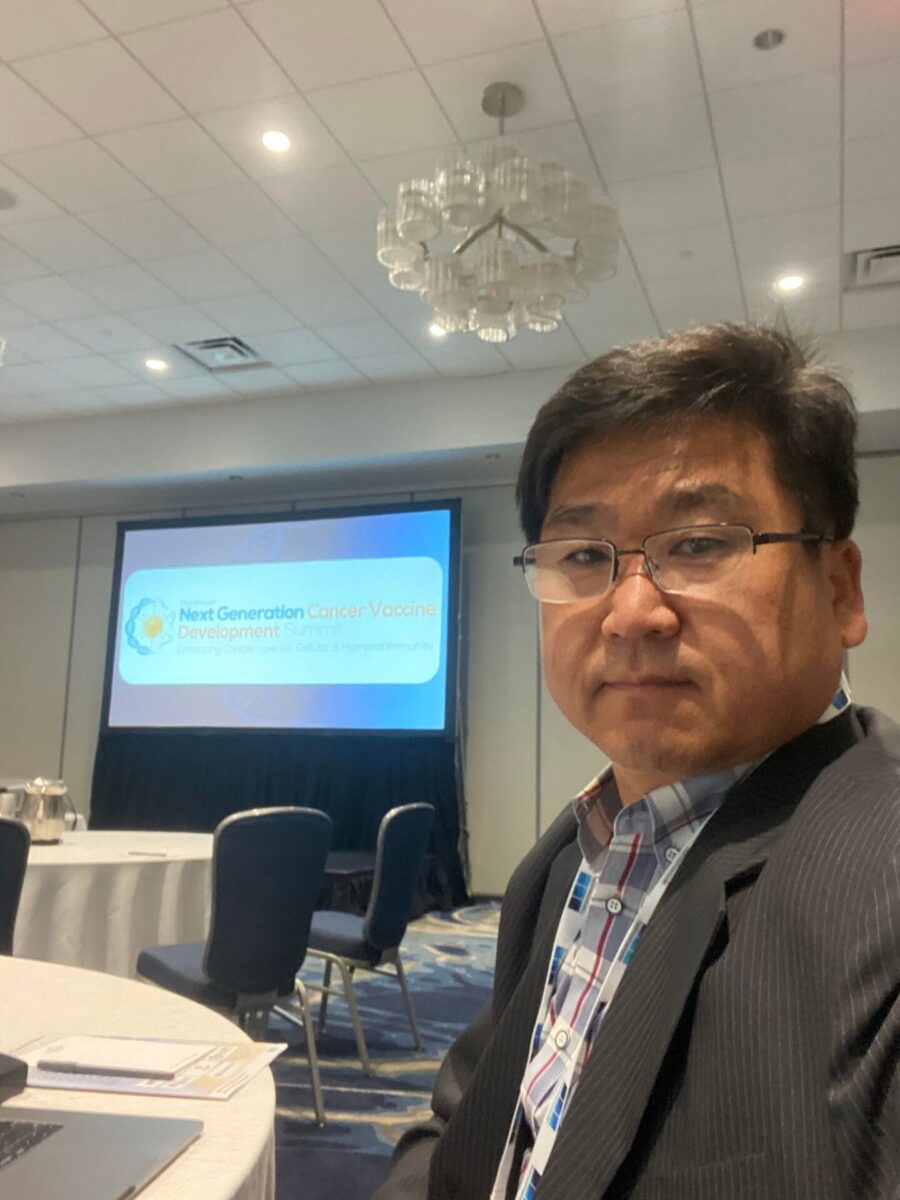
Celloram presents its Protexi technology at the 2nd Annual Global NeoAntigen Vaccine Summit in Boston, MA

Dr. Seungwhan Lim, VP and Directior of Scientific Operations, Cell Therapy Division, presented at the Global NeoAntigen Vaccine Summit in Boston, MA on August 17-18, 2022. Also in attendance were industry leaders in the cancer vaccine development space, including Janseen R&D, Moderna and Genetech. The NeoAntigen Vaccine Summit serves as an opportunity for industry experts to trade up-to-date clinical and commercial developments in next-generation cancer vaccine platforms.

Celloram’s Protexi technology is an innovative cancer vaccine that provides personalized cell therapy by helping to activate the patient’s own immune response against cancer cells. Protexi utilizes personalized tumor-specific antigens, called neoantigens, that are created from genomic analyses of the patient’s tumor. These antigens are then loaded into expanded autologous mature dendritic cells to help trigger the patient’s own immune system response against the tumor. Together in combination with immune modulators, Protexi forms the basis of next-generation cancer vaccines designed to target difficult to treat tumors, including therapy-resistant, immune-cold and inoperable tumors for which survival rates remain unacceptably low.    

Celloram successfully closes its 8M Seed Series Round

Celloram successfully closed its $8M Seed Series Round, securing funds to advance its mission of developing safer and more effective treatments for cancer, immune and metabolic disorders. Seed Series investors include MedPacto Inc., Theragen Etex, and Winvest, among others.

Celloram’s research pipelines focus on both innovative cell therapies and novel small molecule therapeutics, with primary indications including difficult-to-treat triple negative breast cancer (TNBC) and graft-versus-host disease (GVHD). The Seed Series funds will allow Celloram to expand its research team and facilities and provide continued support of the development of novel therapies for these critical disease indications.

Celloram is awarded $0.2M DOD Grant to improve Post-Trauma-Induced Osteoarthritis

Celloram was awarded a $0.2M grant from the U.S. Department of Defense to improve post-trauma induced osteoarthritis. Osteoarthritis is a leading cause of mobility-related disability and is usually induced by the gradual wearing-down of joint cartilage over time. Post-trauma induced osteoarthritis, or PTOA, is a subtype of osteoarthritis that develops after joint injury and therefore disproportionality effects a young population.

Many PTOA cases recover within 6 months, but some cases can develop into chronic disease. The activation of inflammatory mechanisms is thought to play an important role in the progression of acute to chronic disease, so early interventions are of interest. Celloram hopes that by applying its innovative cell therapy technologies that work with the power of the immune system, we can develop early-intervention therapies to treat this debilitating chronic condition.

Dr. Liraz Levi joins as VP and Director of Scientific Operations, Small Molecule Program

Dr. Liraz Levi joins Celloram as VP and Director of Scientific Operations of our Small

Molecule Program. Dr. Levi completed her Ph.D. at The Hebrew University of

Jerusalem and previously served as a principal investigator in the Case Comprehensive

Cancer Center at Case Western Reserve University.

Dr. Levi’s research began with an interest in dietary nutrients and how they affect

molecular processes in the body. Her research has since expanded into how fatty acids

and other small molecules can enhance or disrupt the processes that regulate cancer

cells and metabolic diseases.

Dr. Levi is a welcome and valued addition to Celloram and our Small Molecule Program.

Dr. Seunghwan Lim joins Celloram as VP and Director of Scientific Operations of our Cell Therapy Program

Dr. Seunghwan Lim joins Celloram as VP and Director of Scientific Operations of our Cell Therapy Program. Dr. Lim completed his Ph.D. in cancer biology and therapeutics development at SUNY Upstate Medical University and his postdoctoral training at the National Cancer Institute, NIH and Case Western Reserve University.

His research interests largely focus on cellular signaling events, specifically the TGF-β signaling pathway. TGF-β is a multifunctional cytokine that plays an important role in regulating malignant cancer behaviors.

“With over 20 years of research experiences, I feel like I have to use this knowledge to develop something more special that can save some lives” says Dr. Lim.

We are thrilled to welcome Dr. Lim to Team Celloram.